Posted on — Leave a comment

How to Choose the Right Accessories for Your Smartphone

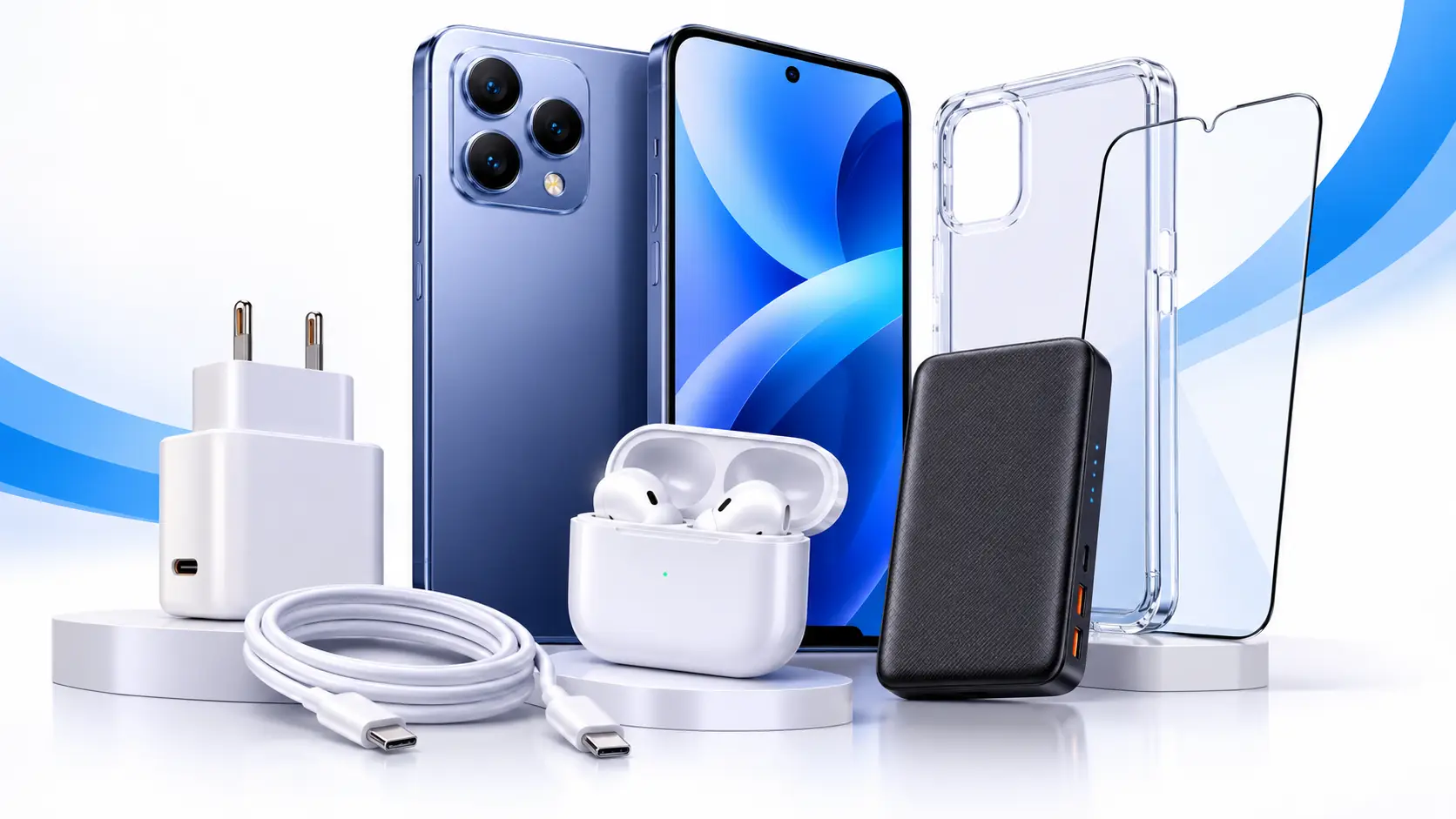
Smartphone accessories buying guide with essential mobile gadgets

How to Choose the Right Accessories for Your Smartphone

Choosing the right smartphone accessories can make your phone more useful, comfortable, and convenient. Whether you use your smartphone for work, education, gaming, photography, or entertainment, the right accessories can improve your everyday experience. However, not every accessory is suitable for every phone. You should consider compatibility, quality, safety, durability, and your budget before buying.

This guide explains how to choose essential smartphone accessories, including chargers, USB-C cables, earphones, power banks, phone cases, screen protectors, and other useful gadgets. It also covers practical buying tips for customers in Pakistan.

Introduction

A smartphone is more than a device for making calls. People use it for online classes, business communication, navigation, photography, social media, and online shopping. Suitable accessories help make these activities easier.

Essential mobile accessories for everyday smartphone use

For example, a reliable charger keeps your phone powered, a protective case helps protect its body, and wireless earbuds make listening more convenient. The best choice depends on your smartphone model and personal requirements.

Quick Answer: How Do You Choose the Right Smartphone Accessories?

Choose smartphone accessories by checking device compatibility, product quality, charging specifications, safety features, durability, and price. Buy products that solve a genuine everyday problem rather than spending money on unnecessary gadgets.

Why Are Smartphone Accessories Important?

Smartphone accessories improve convenience and help you get more value from your device. Different accessories serve different purposes, from protecting your phone to improving its charging and audio experience.

  • Protection: Cases and screen protectors help protect your smartphone from everyday scratches and minor impacts.
  • Convenience: Phone holders and stands make hands-free use easier.
  • Power: Chargers, cables, and power banks help keep your phone charged.
  • Entertainment: Earphones and headphones improve your audio experience.
  • Productivity: OTG adapters and compatible storage accessories can support additional tasks.

10 Essential Smartphone Accessories to Consider

Here are ten useful smartphone accessories worth considering. You do not need to purchase everything. Choose the products that match your lifestyle and phone requirements.

1. Fast Charger

Compatible smartphone fast charger and USB-C charging cable

A fast charger is one of the most useful accessories for smartphone users. It helps reduce charging time when your phone supports the relevant fast-charging technology.

Before purchasing a charger, check your phone manufacturer’s recommended charging specifications. Consider the supported charging protocol, output power, connector type, and charger quality. A higher wattage number does not automatically mean your phone will charge faster.

Choose a charger from a reliable manufacturer and avoid poorly made products with unclear specifications.

2. High-Quality USB-C or Lightning Cable

A charging cable is essential for everyday smartphone use. However, cables differ in charging capacity, data transfer capabilities, and build quality.

Check the following before buying:

  • Connector compatibility with your smartphone.
  • Supported charging power and current.
  • Data transfer support if you need it.
  • Strong connectors and durable cable construction.
  • Certification or compliance information where applicable.

USB-C connectors do not guarantee identical charging speeds or data transfer performance. Read the product specifications before purchasing.

3. Power Bank

Portable power bank and wireless earbuds for smartphone users

A power bank is useful for people who travel, attend classes, work outside, or frequently use their smartphones throughout the day.

Consider these factors when selecting a power bank:

  • Capacity: Choose a suitable capacity according to your phone battery and daily usage.
  • Output: Check whether its charging output supports your phone’s requirements.
  • Ports: Consider USB-A and USB-C ports according to your devices.
  • Size: Select a portable design that is convenient to carry.
  • Safety: Prefer products with clear specifications and appropriate protection features.

Remember that actual charging capacity can be lower than the advertised battery capacity because of energy conversion losses.

4. Earphones or Wireless Earbuds

Earphones and wireless earbuds are useful for music, video calls, online classes, gaming, and watching videos.

Before buying, consider sound quality, microphone performance, comfort, battery life, connectivity, and compatibility. If you frequently attend meetings or make calls, microphone quality should be an important factor.

Wired earphones may suit users who prefer a direct connection, while wireless earbuds offer greater freedom of movement.

5. Protective Phone Case

Smartphone protective case and tempered glass screen protector

A phone case helps protect your smartphone against everyday scratches and minor impacts. It can also improve grip and provide a more comfortable holding experience.

Choose a case that matches your exact smartphone model. Check camera cutouts, charging-port access, button placement, and overall fitting.

Popular options include transparent cases, silicone cases, rugged cases, and slim protective covers.

6. Tempered Glass Screen Protector

A screen protector adds a protective layer over your smartphone display. It can help reduce scratches and may provide additional protection against some impacts.

Check the exact screen size, edge design, camera and sensor cutouts, and compatibility with your phone case. Some protectors may affect fingerprint recognition or touch performance if they are poorly fitted or unsuitable.

7. Mobile Phone Holder and Stand

A mobile phone holder or stand is useful for watching videos, attending online meetings, following recipes, and making video calls.

Choose a stable design with a suitable viewing angle. If you need a car phone holder, check its mounting method and compatibility with your vehicle.

8. Wireless Charger

A wireless charger provides a convenient way to charge compatible smartphones without connecting a charging cable directly to the phone.

First, confirm that your smartphone supports wireless charging. Then check the charger’s supported charging standard, power output, and alignment requirements. Also consider whether your phone case allows proper charging.

Do not assume that every smartphone supports wireless charging simply because it has a glass back.

9. OTG Adapter

An OTG adapter can help connect compatible smartphones to USB accessories such as flash drives, keyboards, and other supported devices.

Check whether your smartphone supports USB OTG and choose an adapter with the correct connector. Some connected devices may also require additional power or software support.

10. Bluetooth Speaker

A Bluetooth speaker is a practical accessory for listening to music, podcasts, and other audio content. It can be useful at home, during outdoor activities, or when sharing music with friends.

Consider sound quality, battery life, portability, Bluetooth connectivity, durability, and water-resistance ratings if you need outdoor use.

How to Choose Compatible Smartphone Accessories

Compatibility should be your first priority. An attractive or inexpensive accessory is not a good purchase if it does not work properly with your smartphone.

1. Check Your Smartphone Model

Find your exact phone model in the device settings or on its original packaging. Different versions of smartphones may have different dimensions, connectors, and supported features.

2. Check Charging Specifications

Before purchasing a charger or cable, check your phone’s supported charging technology and power requirements. Make sure the charger and cable are suitable for the device.

3. Review Product Quality

Look for clear product specifications, reliable construction, suitable safety features, and a trustworthy manufacturer. Avoid products with unclear branding or unrealistic performance claims.

4. Compare Price and Value

Do not select an accessory based only on its low price. Compare its quality, features, compatibility, durability, and available warranty or return conditions.

5. Read Product Details

When shopping online, read the product description carefully. Check supported devices, connector types, dimensions, package contents, and seller information before placing an order.

Smartphone Accessories Comparison Table

AccessoryMain PurposeImportant Buying Factor
Fast ChargerCharging your phonePower and protocol compatibility
USB-C CableCharging and data transferPower and data specifications
Power BankPortable chargingCapacity and output
EarphonesAudio and callsSound and microphone quality
Phone CaseBody protectionExact model compatibility
Screen ProtectorDisplay protectionScreen size and fitting
Phone HolderHands-free viewingStability and adjustment
Wireless ChargerWireless chargingSupported charging standard
OTG AdapterConnecting USB devicesConnector and OTG support
Bluetooth SpeakerWireless audioSound and battery life

Common Mistakes to Avoid When Buying Phone Accessories

Many buyers focus only on appearance or price. However, a few simple checks can help you avoid unsuitable products.

  1. Ignoring compatibility: Always check your exact smartphone model and connector type.
  2. Buying extremely cheap chargers: Poor-quality charging products may create overheating or electrical safety risks.
  3. Assuming all USB-C cables are the same: Charging power and data capabilities can differ.
  4. Ignoring product specifications: Read the manufacturer’s information before buying.
  5. Choosing the wrong screen protector: Check the exact model and screen dimensions.
  6. Ignoring return policies: Understand the seller’s exchange, refund, and warranty conditions.

Tips for Buying Smartphone Accessories in Pakistan

When purchasing smartphone accessories in Pakistan, consider both product quality and the reliability of the seller. Online marketplaces and local mobile shops offer many choices, but specifications and product quality can vary.

Use these practical tips before spending your money:

  • Compare prices from different sellers.
  • Check the exact smartphone compatibility.
  • Ask about warranty and replacement conditions.
  • Read customer reviews where available.
  • Check product packaging and specifications.
  • Use secure payment methods when shopping online.
  • Keep your purchase receipt for future reference.

Whether you are a student, professional, gamer, or frequent traveller, buy accessories according to your daily needs. You can also explore Siyal Mobile for mobile and technology accessories.

Frequently Asked Questions

1. What are the most useful smartphone accessories?

Some of the most useful accessories include a compatible charger, charging cable, power bank, protective case, screen protector, and earphones. Your requirements depend on how you use your smartphone.

2. How do I choose the right charger for my phone?

Check your smartphone’s supported charging power, charging protocol, and connector type. Select a reliable charger that meets those specifications.

3. Are expensive smartphone accessories always better?

No. A higher price does not automatically guarantee better quality. Compare compatibility, materials, specifications, safety features, and warranty before purchasing.

4. Which power bank is suitable for daily use?

A suitable power bank depends on your phone battery, charging requirements, portability preferences, and daily usage. Check its capacity, output, and safety information.

5. How can I identify good-quality mobile accessories?

Check the manufacturer’s details, product specifications, build quality, packaging, certification information where applicable, and seller reputation. Avoid products with unrealistic claims.

6. Do all smartphones support wireless charging?

No. Wireless charging is available only on compatible smartphone models. Check your phone manufacturer’s specifications before buying a wireless charger.

7. Where can I buy smartphone accessories in Pakistan?

You can purchase smartphone accessories from reliable local mobile shops and established online stores. Compare product details, compatibility, seller reputation, and return policies before ordering.

Conclusion

Choosing the right smartphone accessories is about finding products that match your phone, lifestyle, and budget. Start with essential items such as a compatible charger, quality cable, protective case, screen protector, and power bank. Then consider additional gadgets such as wireless earbuds, phone holders, and Bluetooth speakers according to your needs.

Always check compatibility, specifications, quality, and seller reliability before purchasing. These simple steps can help you make smarter buying decisions and enjoy a better smartphone experience.

If you are looking for mobile and technology accessories, visit Siyal Mobile and explore the available options for your everyday needs.

Follow Siyal Mobile on Social Media

Follow Siyal Mobile to stay connected with mobile accessories, technology updates, product information, and useful smartphone tips.

Posted on — Leave a comment

Original vs Copy Mobile Accessories: How to Identify the Difference

Original vs copy mobile accessories including charger, USB-C cable and phone accessories

Introduction

Buying mobile accessories can look simple until you have to choose between an original, certified, compatible, or suspiciously cheap product. Two charging cables may look almost identical, yet their build quality, charging performance, compatibility, and reliability can be very different.

Knowing how to identify original vs copy mobile accessories can help you avoid wasting money on poor-quality chargers, cables, handsfree, power banks, and other phone accessories.

For Pakistani buyers, price is naturally an important consideration. However, the cheapest accessory is not always the best value. A good buying decision means checking the product’s construction, packaging, compatibility, specifications, certification where applicable, and seller information before purchasing.

This guide explains practical ways to distinguish genuine or properly certified accessories from low-quality copies and what to check before buying mobile accessories in Pakistan.


Original vs Copy Mobile Accessories: What’s the Difference?

An original mobile accessory is generally produced by the device manufacturer or an authorized/certified accessory manufacturer according to the relevant specifications.

A copy or counterfeit accessory may imitate the appearance, packaging, branding, or specifications of a genuine product without having the same manufacturing controls or certification.

There is also an important middle category: third-party accessories.

A third-party accessory is not necessarily fake. A reputable third-party manufacturer can produce a legitimate, compatible product without copying the original brand’s identity.

So, don’t assume:

Original brand = good and third-party = bad.

The more useful question is whether the accessory is genuine, properly certified where relevant, compatible with your device, honestly labelled, and made to an appropriate quality standard.


1. Check the Packaging Carefully

Packaging is one of the easiest places to start.

A suspicious accessory may have:

  • Poor-quality printing
  • Spelling or grammatical mistakes
  • Blurry logos
  • Uneven colours
  • Missing manufacturer information
  • Missing model numbers
  • Unclear specifications
  • Poor-quality seals
  • Packaging that looks different from the manufacturer’s normal design

However, packaging alone should not be treated as absolute proof.

Counterfeit products can have surprisingly convincing boxes, while genuine products may have packaging variations between countries, production batches, or generations.

What should you check?

Look for:

  1. Manufacturer or brand name
  2. Product/model number
  3. Supported specifications
  4. Compatibility information
  5. Regulatory or certification information where applicable
  6. Manufacturer/importer details
  7. Clear printing and professional construction

If the box makes impressive claims but provides little useful product information, be cautious.


2. Compare the Build Quality

A physical inspection can reveal a lot.

Look closely at the:

  • Cable jacket
  • Connector
  • Plug
  • Charging brick
  • Buttons
  • Seams
  • Housing
  • Strain relief
  • Printing or engraving

A poor-quality copy may have rough plastic edges, loose connectors, weak cable joints, uneven seams, or poorly fitted components.

A good accessory should feel appropriately solid for its product type.

But remember

Weight alone does not prove authenticity.

A heavier charger is not automatically better, and a lighter cable is not automatically fake. Build quality should be considered together with specifications, compatibility, manufacturer information, and certification.


3. Don’t Judge a Charger Only by Its Wattage

One of the most common mistakes is choosing a charger simply because a large wattage number is printed on the box.

For example, a package may advertise a high charging output, but that number alone does not tell you whether the charger supports the charging protocol your phone requires.

Before buying a fast charger, check:

  • Output voltage
  • Output current
  • Total power
  • Supported charging protocols
  • Connector type
  • Device compatibility
  • Manufacturer information
  • Certification or compliance information where applicable

A charger should be selected according to both the charger and the phone’s requirements.

Why this matters

Fast charging is not just about the biggest number printed on a package. The phone, charger, cable, and charging protocol all need to work together.


4. Examine USB-C Cables More Carefully

USB-C does not automatically mean that every cable provides the same performance.

USB-IF explains that USB cables can have different capabilities and that users need to select a cable appropriate for their intended USB environment. Its certification program also distinguishes products according to their tested capabilities.

For USB-C to USB-C cables, USB-IF has specific power and performance marking requirements for certified cables.

When buying a USB-C cable, check:

  • Connector quality
  • Cable thickness and flexibility
  • Claimed power capability
  • Data-transfer capability if important to you
  • Manufacturer information
  • Certification markings where applicable
  • Compatibility with your charger and device

A cable intended only for charging may not provide the same data-transfer capability as a higher-performance cable.


5. Look for Genuine Certification Where Applicable

Certification marks can be useful, but buyers should understand what they actually mean.

USB-IF states that products must pass its compliance testing and meet the relevant requirements before they can be certified and listed in its system.

USB-IF also provides a public product search for products certified to bear its USB-IF logo.

This means a buyer should not simply trust a random “Certified” label printed on a box.

Instead:

  • Check what organization issued the certification.
  • Understand what the certification covers.
  • Verify the product or manufacturer when an official database is available.
  • Don’t confuse a marketing claim with an actual certification.

For some accessories, certification may relate to a particular feature or ecosystem rather than proving that every aspect of the product is identical to an original manufacturer accessory.


6. Be Extra Careful With Apple Lightning Accessories

Apple provides specific guidance for identifying counterfeit or uncertified Lightning accessories.

According to Apple Support, certified third-party Lightning accessories carry the MFi badge on their packaging. Apple also recommends checking the packaging, connector construction, markings, and laser etchings when identifying suspicious Lightning accessories.

Apple notes that counterfeit or uncertified Lightning accessories can result in problems such as poor charging or syncing, connector damage, excessive heat, or damage to the device.

Therefore, if you are buying a Lightning cable or accessory, don’t choose solely on appearance or price.

Check the certification information and physical construction carefully.


7. Check the Connector

The connector is one of the most important parts of a charging cable.

A poor-quality connector may:

  • Fit too loosely
  • Fit incorrectly
  • Have uneven metal contacts
  • Show poor finishing
  • Become loose after repeated use
  • Heat up abnormally
  • Break near the cable joint

For Lightning accessories, Apple specifically recommends comparing connector construction and laser markings when checking for counterfeit or uncertified products.

For USB-C and other connectors, inspect the plug for obvious manufacturing defects and make sure it fits your device properly without excessive force.


8. Check the Cable’s Intended Use

Not every cable is designed for every purpose.

Before purchasing, ask yourself:

Do I need charging only, or charging plus data transfer?

For example, a cable may be suitable for charging a phone but not provide the data performance you need for another device.

If you’re purchasing a USB-C cable for a laptop, tablet, phone, external drive, monitor, or other equipment, check the required power and data capabilities before buying.

This is especially important when replacing a cable that came with an expensive device.


9. Don’t Trust Extremely Low Prices Blindly

Price is not proof of authenticity.

A genuine accessory can be discounted, while a copy can be expensive.

However, an unusually low price should encourage you to ask more questions.

Check:

  • Product source
  • Manufacturer
  • Packaging
  • Model number
  • Specifications
  • Seller reputation
  • Warranty information, if offered
  • Certification where applicable
  • Compatibility

The goal is not to buy the most expensive accessory. The goal is to buy a product that provides the right combination of quality, compatibility, safety, performance, and value.


10. Buy According to Your Phone’s Compatibility

An accessory can be genuine but still unsuitable for your particular device.

Before buying, identify:

Your phone’s charging port

Common examples include:

  • USB-C
  • Lightning
  • Micro-USB on some older devices

Your phone’s charging requirements

Check the manufacturer’s specifications or documentation for the charging capabilities supported by your model.

Your intended use

Do you need:

  • Basic charging?
  • Fast charging?
  • Data transfer?
  • Car charging?
  • Travel charging?
  • Laptop charging?
  • Power-bank charging?

Once you know these requirements, it becomes much easier to select the right accessory.


Original vs Copy Accessories: Quick Comparison

FeatureGenuine/Quality AccessorySuspicious Copy
PackagingClear and professionally producedMay contain errors or poor printing
Build qualityGenerally consistentMay feel poorly finished
ConnectorProper fit and constructionMay be loose or poorly finished
SpecificationsClearly statedMay be vague or exaggerated
CompatibilityClearly identifiedMay be unclear
CertificationCan be independently verifiable where applicableMay rely on unsupported claims
Manufacturer detailsUsually identifiableMay be missing or unclear
PriceVariesOften marketed with unusually attractive pricing
Long-term reliabilityDepends on product and manufacturerMore uncertain

This table is a buying guide, not an absolute authenticity test. A single feature should not be used to decide whether an accessory is genuine.


11. How to Check a Mobile Accessory Before Buying

Use this simple five-step process.

Step 1: Identify Your Requirement

Know exactly what you need.

For example:

“I need a USB-C cable for charging my phone.”

or:

“I need a USB-C cable that supports both charging and data transfer.”

Step 2: Check Compatibility

Confirm that the accessory works with your phone, charger, laptop, or other device.

Step 3: Inspect the Product

Look at the connector, cable, charger body, printing, packaging, and overall construction.

Step 4: Verify Important Claims

If the product claims certification, special charging technology, or a particular performance level, check whether that claim can be verified through the relevant manufacturer or certification organization.

Step 5: Consider the Seller

A reliable seller should be able to provide clear product information rather than simply saying:

“This is original.”

Ask for the model, specifications, compatibility, and available warranty information when relevant.


Common Mistakes Buyers Make

Buying only because the price is low

A cheap accessory can become expensive if you have to replace it repeatedly.

Assuming a familiar logo proves authenticity

Branding can be copied. Look beyond the logo.

Assuming every USB-C cable is identical

USB-C describes the connector type, not every capability of the cable.

Ignoring compatibility

A cable or charger can be good quality but unsuitable for your particular device or charging requirements.

Trusting huge wattage claims

A large number on a package is not enough. Check the actual specifications and supported charging protocols.

Buying without checking the connector

The connector is one of the most failure-prone parts of a low-quality cable.


Are Third-Party Mobile Accessories Safe?

Third-party does not automatically mean counterfeit.

A third-party accessory can be a legitimate product from a manufacturer other than the phone manufacturer.

The important factors are:

  • Manufacturer transparency
  • Product quality
  • Compatibility
  • Correct specifications
  • Appropriate certification where relevant
  • Reliable seller
  • Clear product information

This distinction is important because many buyers unnecessarily assume that they must purchase an accessory carrying the exact same brand as their phone.

A reputable third-party product can be a practical alternative when it meets the required standards and compatibility requirements.


What Should Pakistani Buyers Check Before Ordering Online?

When buying mobile accessories online in Pakistan, pay particular attention to the product listing.

Look for:

  • Clear product photographs
  • Exact model or product name
  • Connector type
  • Power specifications
  • Compatibility information
  • Manufacturer information
  • Warranty details if offered
  • Seller information
  • Return policy

Don’t rely only on phrases such as “100% original” or “best quality.”

If the listing does not explain what you are actually receiving, ask the seller before placing the order.

For students, office workers, university users, travellers, and everyday smartphone users, the right accessory is usually the one that matches the device and intended use—not necessarily the one with the most impressive marketing claims.


When Should You Replace a Mobile Accessory?

Consider replacing an accessory when you notice:

  • Exposed or damaged wires
  • Cracked charger housing
  • Loose connector
  • Unusual heating
  • Intermittent charging
  • Frequent disconnections
  • Damaged plug
  • Burning smell
  • Visible physical damage

Do not continue using an accessory simply because it still works intermittently.

If an accessory is visibly damaged or behaves abnormally, replacing it is generally the better choice.


Shop Mobile & Computer Accessories at Siyal Mobile

Choosing the right accessory starts with knowing what your device actually needs.

Siyal Mobile offers mobile accessories, computer accessories, chargers, charging cables, handsfree and earphones, power banks, phone accessories, and related technology products for customers in Pakistan.

Before purchasing, compare the product’s compatibility, specifications, connector type, and intended use rather than choosing based only on price or appearance.

Explore Siyal Mobile and find the right accessory for your device and everyday needs.


Follow Siyal Mobile on Social Media

Stay updated with the latest mobile accessories, computer accessories, product updates, useful tips, deals, and technology content from Siyal Mobile. Follow us on social media:

Most Categories

1. Mobile Accessories

2. Fast Chargers

3. Charging Cables

4. Handsfree & Earphones

5. Power Banks

6. Phone Accessories

7. Computer Accessories

FAQs

How can I tell if a mobile accessory is original?

Check the packaging, manufacturer information, model number, specifications, physical construction, compatibility, certification where applicable, and seller reliability. Do not rely on the logo or price alone.

Are cheap mobile accessories always fake?

No. A low price does not automatically mean a product is fake. However, unusually low prices should encourage you to check the product’s manufacturer, specifications, quality, and seller information more carefully.

Is every USB-C cable the same?

No. USB-C describes the connector format, but cables can have different power, data, and performance capabilities. USB-IF specifically notes that cables can have different capabilities.

Are third-party mobile accessories safe?

Third-party accessories are not automatically counterfeit. A reputable third-party manufacturer can make legitimate accessories. Check compatibility, specifications, manufacturer information, quality, and applicable certification.

How do I identify a counterfeit Lightning cable?

Apple recommends checking the packaging, MFi badge, connector construction, USB connector, and laser markings. Apple provides detailed examples of genuine and counterfeit or uncertified Lightning accessories.

Should I buy a charger based only on wattage?

No. Wattage is only one factor. Check the charger’s output specifications, supported charging protocols, connector type, and compatibility with your device.

How do I know whether a USB accessory is USB-IF certified?

For products eligible for USB-IF certification, you can use the USB-IF public product search to check certified products. USB-IF says its public search is limited to products certified to bear its USB-IF logo.

When should I replace a charging cable?

Replace a cable if it has exposed wires, damaged connectors, visible physical damage, unusual heating, intermittent charging, or repeated disconnections.